1. Introduction
The pulp and paper industry has witnessed titanic transformations in the last several decades. Paper production, once a conventional closed-loop process, is now directed by innovation, sustainability, and competitiveness. With increasing regulatory demands and cost management, the mills are increasingly looking towards specialty chemicals to enhance product quality, reduce operating expenses, and go green.
Specialty chemicals—carefully formulated to be utilized in a specific paper manufacturing application—are all engaged with improving paper manufacturing processes and formulating the physical, optical, and mechanical properties of paper. Specialty chemicals are utilized for cooking and bleaching, refining, sizing, and wastewater treatment.
2. The Role of Specialty Chemicals in the Modern Paper Industry
Indian papermills and papermakers have a set of problems concentrating: unreliability of raw material quality, energy cost being high, control of the environment, and customer specifications regarding bright, smooth, and strong paper.
Choice solution to the issues is specialty chemicals. They allow the mills to:
- Optimize utilization of fiber from low grade raw material.
- Optimize pulp yield and paper strength.
- Minimize chemical and energy consumption.
- Facilitate environmental compliance.
- Guarantee product consistency and mill performance.
With the application of environmentally friendly, performance-improving chemicals, mills can achieve improved performance without, or with minimal, capital investment—a value-added advantage where there is a competitive position.
3. Main Use of Papermaking Specialty Chemicals
3.1. Cooking Additives
Pulping involves the process of transforming the raw material into acceptable fibers suitable for use in papermaking. Raw material quality variation may lead to inconsistent pulp and increased alkali usage.
Specialty cooking chemistries such as surfactants and anthraquinone blends help achieve homogenous pulp quality and 8–10% reduction in alkali. The chemistries also help screen rejects and reduction in yield improvement, i.e., economic as well as quality improvement.
3.2. Pulp Washing Aids
Ineffective washing produces more alkali loss, costlier bleaching, and effect on pulp whiteness. Wash aids like defoamers and drainage promoters contribute to the boost in washing efficiency by 15–25%.
For instance, usage of the new generation defoamers reduced soda loss from 30–32 kg to 23–25 kg per tonne of pulp and improved washing rate and foam control—visible proof of how the specialty chemicals enhance process efficiency.
3.3. Bleaching Enzymes
The replacement for chlorine bleaching because of environmental pressure resulted in enzyme bleaching. Alkaline xylanase is a type of enzyme that reduces chlorine use by 30%, improves whiteness of the pulp, and minimizes toxic effluents (AOX, BOD, COD).
3.4. Slushing and Refining Aids
As it is one of the results of growing fiber deficits, paper use for recycling has been on the rise. Recycling breaks down the fibers and makes them energy-intensive. Character specialty slushing reductions reduce energy and pulping time by 25–40%, enhance dispersion of the fiber, and reduce rejects.
In addition, enzyme refining agents enhance refining strength by 20% in addition to enhanced paper strength. Performance testing has been observed with higher burst, tensile, and tear strength of 15–25%, low formation of fines, and enhanced fiber bonding.
3.5. Wet-End Additives
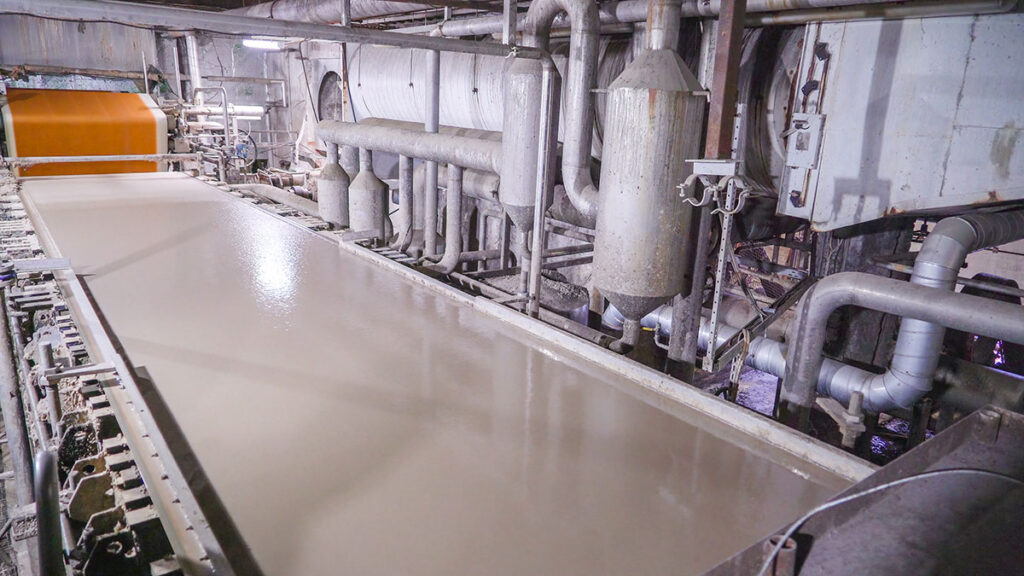
Wet end of a paper mill refers to a place where pulp suspension is being transformed into a continuous sheet. Special wet-end additives—i.e., dry-strength resins, retention aids, and defoamers—are an important component of the process.
Dry strength resins (DSRs) also impart stiffness and adhesion, particularly to copier or farm paper fibers. Copier and offset papers experienced 20–30% increase in stiffness gain as well as enhanced surface quality by some mills.
Retention aids enable fillers and fine particles to be retained and drainage and formation are enhanced. Wet-end chemistry can be controlled for increased productivity as well as consistent paper properties.
3.6. Sizing and Surface Treatment
Acid rosin-alum sizing is increasingly being replaced by neutral or alkaline size systems to produce whiter, more durable paper.
Surface sizing—enabling through specialty chemicals such as styrene acrylates, melamine derivatives, and polyamides—is designed to enhance water resistance, printability, and size stability. Size agents for future size papers possess lower water pick-up, lower penetrability, and lower curl when printed.
3.7. Slime Control Agents
Slime accumulation, particularly in alkaline systems, is a severe issue caused by starches, latexes, and binders in recycled paper. Certain biocides and anti-slime chemicals also ensure effortless machine operation and microbial accumulation prevention. This means not just better product quality but also reduced downtime and maintenance costs.

4. Environmental and Economic Impact
Application of specialty chemicals promotes the optimum interest of the industry under the circumstances of sustainability. Their carefully designed chemical structure minimizes waste, water and energy consumption, and lessens the environmental footprint of the papermaking process.
The environmental advantages are:
- Minimization of toxic chlorine-containing compounds and effluent load.
- Minimization of COD and BOD.
- Increased fiber recovery, lowering raw material needs.
Economic advantages are:
- Lower operating expense through reducing use of chemical and energy.
- Increased yield and machine efficiency.
- Increased equipment life and fewer maintenance interruptions.
- Combined, they’re a highly desired competitive advantage to an industry operating on slim margins.
6. Conclusion
Specialty chemical integration has transformed papermaking today—it’s enabling quality improvement, energy efficiency, and sustainability. Whether cooking or bleaching, refining or sizing, these high-performance chemical solutions allow mills to do more with less.
With more competition globally and balanced manufacturing in a sustainable way, specialty chemicals will fuel innovation in the paper industry even further. With all these technologies in operation, not just can the mills keep up with the environmental demands, but their profitability and sustainability in the competitive global world as well in the long run.
